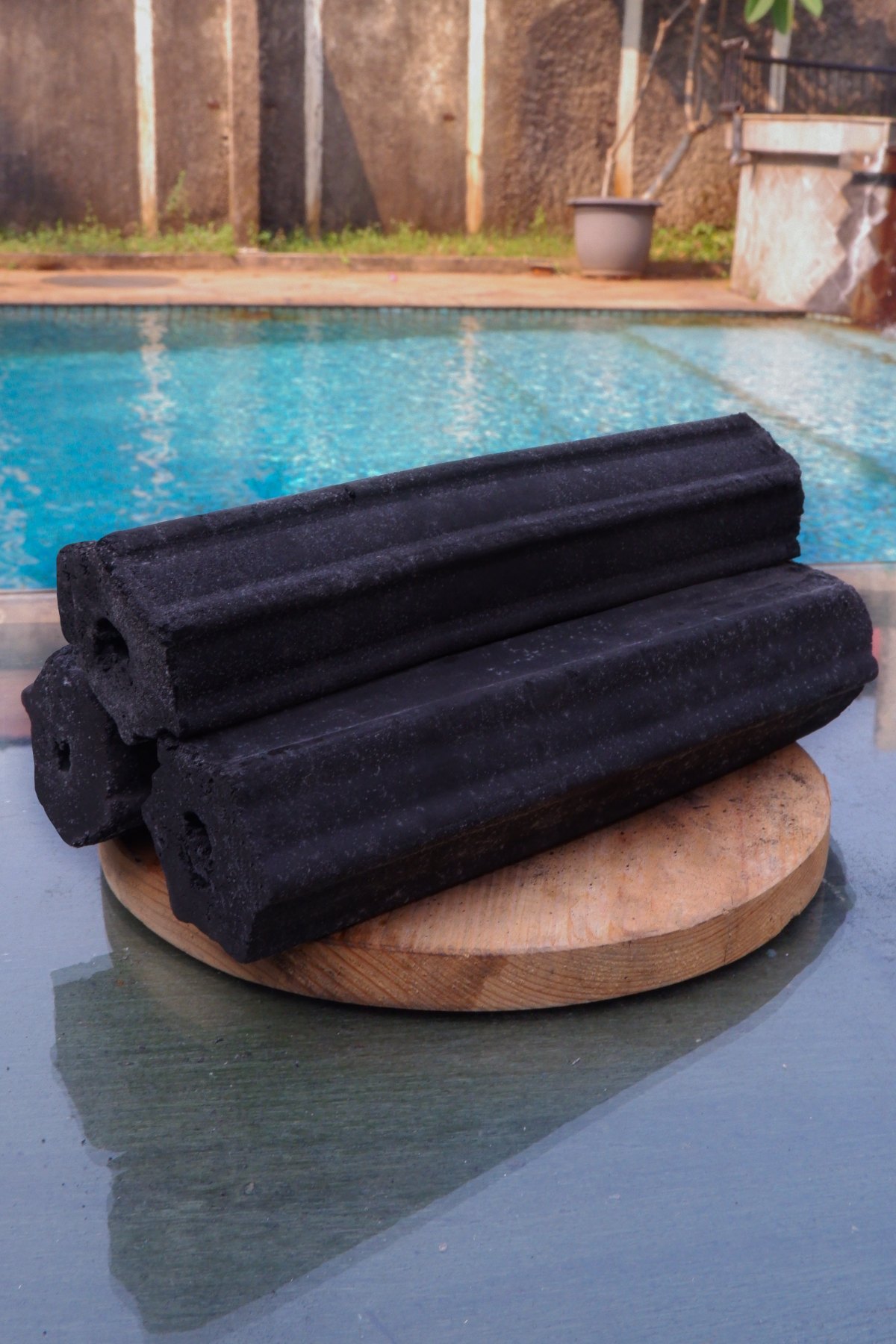
WERE HERE TO MAKE THE BEST COCONUT CHARCOAL BRIQUETTE AROUND THE WORLD.

Graha Mitra Lestarindo delivers premium quality Charcoal Briquette Supplier products with consistent supply, maintained standards, and a strong commitment to meet the needs of the Indonesian industry and the global market.

Read more
Factory Process

Coconut Charcoal Briquettes
Process Making

At our factory, every production stage is managed with precision and quality control. From raw coconut shell selection to final packaging, we ensure premium briquettes with strong durability, low ash content, and long burning performance for global export markets.

Premium Quality

Low ash, strong heat, and long-lasting burn performance.

Export Standard

Produced with consistency to meet international market needs.

Efficient Process

Strict monitoring from carbonization to packaging line.

Trusted Supplier

Reliable production capacity for long-term partnerships.

Our Premium Catalog

PRODUCTS

BBQ

CYLINDER (DIAMETER 55 MM)

REQUEST BY ORDER

Tokopedia Shopee
Add to Order

HEXAGONAL

SIZE 20 x 40 MM

REQUEST BY ORDER

Tokopedia Shopee
Add to Order

FINGERSTICK

FINGER

REQUEST BY ORDER

Tokopedia Shopee
Add to Order

CUBE SERIES

C25, C26, C27

REQUEST BY ORDER

Tokopedia Shopee
Add to Order
GML Leadership
Company Profile

OUR
HISTORY.

"Since our inception in 2014, PT. Graha Mitra Lestarindo has been a trailblazer in the coconut charcoal briquette industry."

Our journey began with a passion for sustainability and a commitment to providing high-quality, eco-friendly alternatives to traditional charcoal.

Insights & News

Latest Updates

All Stories
Coconut charcoal briquette cubes beside kraft packaging with shipping containers and a cargo ship in the background
27 Oct 2026

Q4 Charcoal Buying Guide: How Importers Should Plan Orders Before Year-End

Year-end charcoal procurement starts with one practical question: when must the goods be available in your warehouse?

For importers, distributors, and private-label brands, placing an order before December ends does not necessarily mean receiving stock before the new year. Production, packaging approval, cargo preparation, carrier acceptance, ocean transit, customs clearance, and inland delivery all affect the final arrival date.

This Q4 charcoal buying guide explains how to turn your sales forecast into a realistic purchasing plan for coconut charcoal briquettes and other charcoal products sourced from Indonesia.

1. Calculate Your Inventory Gap Before Requesting a Quotation

Begin with your expected sales through the next replenishment date. Review demand by product, customer segment, and destination market rather than assuming that every charcoal category follows the same seasonal pattern.

Separate confirmed customer orders from forecasts. Then check usable warehouse stock and incoming shipments with reliable delivery schedules.

A practical starting point is:

Required order quantity = forecast demand until the next replenishment + target safety stock − usable inventory − confirmed inbound stock.

For example, an importer expecting to sell 30 metric tons before the next replenishment, with a safety-stock target of 5 tons, 12 tons in usable inventory, and 8 tons of confirmed inbound stock would have an estimated purchasing requirement of 15 tons.

This is an illustrative calculation, not a recommended order size. Adjust the result for minimum order quantities, loading constraints, storage capacity, and cash flow.

2. Work Backward From Your Required Warehouse Arrival Date

An estimated vessel departure date is only one milestone. Your purchasing calendar should begin with the date the goods must be ready for distribution at destination.

Work backward through:

  • Customs clearance and inland delivery.

  • Ocean transit and any transshipment.

  • Origin handling and vessel cutoffs.

  • Dangerous-goods acceptance and documentation.

  • Inspection, packing, and applicable cargo-preparation requirements.

  • Manufacturing and packaging-material availability.

  • Sample approval, artwork confirmation, and commercial agreement.

Ask the supplier and freight forwarder which activities can run in parallel and which depend on earlier approvals. Include a contingency allowance based on the route and your experience.

Illustrative planning example: if the agreed end-to-end process takes 10 weeks and you add a two-week contingency allowance, start the order process at least 12 weeks before your required warehouse date. This is a planning example, not a GML lead-time commitment.

If your remaining Q4 window is shorter than the confirmed schedule, assess a realistic January arrival and an interim stock plan.

3. Confirm Product Specifications Before Reserving Production

A quotation is easier to compare when every supplier receives the same specification.

For coconut charcoal briquettes, confirm the intended application, shape, dimensions, tolerances, and packaging format. Agree on measurable acceptance criteria for moisture, ash content, durability, and other relevant performance characteristics.

When comparing burn-test results, ask how the tests were conducted. Results obtained under different conditions may not be directly comparable.

Private-label buyers should also finalize:

  • Retail-pack and master-carton weights.

  • Artwork, barcode, and destination-language requirements.

  • Batch identification and traceability details.

  • Packaging strength and moisture protection.

  • Inspection methods and procedures for handling nonconforming goods.

Use an approved sample and written specification as the purchasing reference. Avoid relying on descriptions such as “premium quality” without defined criteria.

4. Build Charcoal Shipping Compliance Into the Schedule

Charcoal shipping requirements should be addressed before production and booking decisions are finalized.

IMDG Code Amendment 42-24 became mandatory on January 1, 2026. Charcoal must be declared and transported as dangerous goods under UN 1361, CARBON, animal or vegetable origin, Class 4.2.

Ask your supplier and forwarder to confirm the applicable cargo-preparation, packaging, marking, documentation, and stowage requirements with the selected carrier. Include any required treatment or weathering period in the production-to-shipment timeline.

Do not assume that an older shipment’s approval or documentation will automatically be accepted for a new booking. Confirm carrier acceptance for the actual cargo, route, and shipment date.

5. Compare Total Landed Cost, Not Only the Product Price

A lower price per ton does not automatically produce a lower delivered cost.

Compare quotations using the same product specification, quantity, named location, and Incoterms® rule. Identify which charges are included and which remain the buyer’s responsibility.

Your cost review should cover:

  • Product and packaging costs.

  • Inspection and origin handling.

  • Ocean freight and applicable dangerous-goods charges.

  • Insurance, duties, and taxes where applicable.

  • Destination handling, clearance, and inland transport.

  • Potential storage, demurrage, or detention exposure.

Confirm quotation validity, payment milestones, and the treatment of freight changes. Clear commercial terms make it easier to evaluate suppliers and protect your purchasing budget.

6. Protect Quality Without Rushing Final Checks

A year-end deadline should not eliminate the checks needed to protect your inventory.

Agree on inspection timing before production begins. Check the finished goods against the approved specification, including packaging condition, labeling, batch identification, and quantity.

Request the agreed inspection evidence and review document drafts before the relevant shipping cutoffs. Resolve discrepancies while there is still time to correct them.

Where inventory needs and shipping economics justify it, discuss staged deliveries. Assess each shipment separately for cost, carrier acceptance, and operational feasibility.

7. Send a Complete RFQ to Your Supplier

A detailed request for quotation helps suppliers respond with useful commercial and scheduling information.

Include:

  • Product application, shape, size, and specification.

  • Required quantity and acceptable quantity flexibility.

  • Packaging and private-label requirements.

  • Destination country and port.

  • Preferred Incoterms® rule and named location.

  • Required warehouse arrival date.

  • Sample and inspection requirements.

  • Any destination-specific documentation needs.

Ask the supplier to identify the earliest realistic cargo-ready date, approval deadlines, quotation validity, and unresolved dependencies.

Plan Your Next Charcoal Order With GML

PT Graha Mitra Lestarindo supports international buyers seeking Indonesian charcoal briquette sourcing solutions.

Share your specifications, order quantity, packaging requirements, destination port, and target arrival date with the GML team. Request a quotation and discuss product suitability, production availability, and shipment planning before confirming your purchase.

A successful Q4 charcoal order begins with a realistic inventory calculation, clearly approved specifications, and a schedule that covers the complete journey to your warehouse.

Frequently Asked Questions

When should importers place Q4 charcoal orders?

Work backward from the required warehouse arrival date using confirmed production, cargo-preparation, shipping, clearance, and delivery estimates. There is no single deadline suitable for every destination.

Can charcoal ordered in December arrive before year-end?

Only if the complete supply and delivery schedule supports it. Do not treat the order date or vessel departure date as a warehouse-arrival guarantee.

What should buyers prioritize when comparing suppliers?

Compare specification consistency, quality controls, communication, export preparation, realistic scheduling, and total landed cost.

What information should I send GML for a quotation?

Send the product specification, quantity, packaging requirements, destination port, preferred trade terms, and required arrival date.

References

  • International Maritime Organization: IMDG Code

  • Hapag-Lloyd: Mandatory Dangerous Goods Declaration for Charcoal
Read More
Briquettes Supplier
01 Sep 2026

Indonesian Coconut Charcoal Briquette Manufacturer & Supplier

Graha Mitra Lestarindo (GML) is an Indonesian coconut charcoal briquette manufacturer and supplier dedicated to supporting global businesses with consistent charcoal solutions. We serve international B2B buyers, distributors, wholesalers, and brand owners looking for reliable coconut charcoal briquette supply from Indonesia. Our position combines manufacturing capability and trading expertise to deliver products that meet different market requirements.

As a trusted charcoal briquette partner, GML focuses on understanding the needs of international buyers, from product specifications and packaging preferences to supply planning and export requirements. Our approach is built around long-term partnerships, transparent communication, and dependable sourcing solutions. We help businesses simplify their procurement process by providing a direct connection to Indonesia’s coconut charcoal industry.

Our product range includes coconut charcoal briquettes designed for various applications, including hookah and shisha charcoal markets, as well as BBQ charcoal needs. Each product category can be customized based on size, shape, burning performance, packaging, and buyer specifications. With flexible product navigation, customers can explore solutions that match their target market and operational needs.

Quality consistency is a key priority in every stage of our manufacturing and trading process. GML works with internal quality control standards and production monitoring to support reliable supply performance for international customers. Our team is ready to provide product specifications, samples, and commercial details to help buyers evaluate the right charcoal briquette solution.

For companies searching for an Indonesian coconut charcoal briquette manufacturer and supplier, Graha Mitra Lestarindo provides a practical partnership approach. Whether you are expanding your charcoal product portfolio, sourcing private-label products, or building a stable supply chain, our team is prepared to support your requirements. Contact GML today to discuss your specifications and request a quotation (RFQ).
Read More
BBQ Charcoal
24 Aug 2026

BBQ Briquettes vs Lump Charcoal for Restaurants and Retail

Understanding the Difference Between BBQ Briquettes and Lump Charcoal

Choosing the right charcoal fuel is an important decision for restaurants, BBQ businesses, and retail suppliers. BBQ briquettes and lump charcoal both provide excellent heat, but they offer different advantages depending on operational needs.

BBQ briquettes are manufactured charcoal products designed for consistent shape, size, and burning performance. This makes them suitable for businesses that require predictable cooking results.

Lump charcoal is made from natural wood carbonization and is known for its authentic flavor and faster ignition. Many chefs prefer lump charcoal for premium grilling experiences.

For restaurants serving large volumes of food, consistency and efficiency are often key priorities. Briquettes can help maintain stable cooking temperatures during busy service hours.

Meanwhile, retail customers often choose between briquettes and lump charcoal based on cooking style, convenience, and personal preference.

Why Restaurants Prefer BBQ Briquettes

Restaurants need reliable fuel that can support daily operations without creating unnecessary challenges. BBQ briquettes provide uniform burning characteristics that help kitchen teams manage cooking processes more efficiently.

The consistent size of briquettes allows better heat distribution across grills and BBQ equipment. This helps reduce temperature fluctuations during cooking.

For commercial kitchens, fuel efficiency directly impacts operating costs. High-quality briquettes can provide longer burning times and reduce the frequency of charcoal replacement.

Graha Mitra Lestarindo manufactures and supplies charcoal briquettes designed to meet the needs of professional buyers. Our products focus on quality, consistency, and dependable supply.

With proper charcoal selection, restaurants can improve workflow while maintaining the taste and quality expected by customers.

Lump Charcoal Benefits for Premium BBQ Experiences

Lump charcoal remains popular among BBQ enthusiasts because of its natural appearance and traditional grilling characteristics. It produces high heat quickly and can enhance the smoky flavor of grilled foods.

For premium restaurants, lump charcoal can create a unique cooking experience that appeals to customers seeking authentic BBQ flavors.

However, lump charcoal may vary in size, burning time, and heat output depending on the wood source and production process.

This variation can be challenging for businesses that require identical results across multiple cooking sessions.

Retail markets often continue to demand lump charcoal because of its natural appeal and connection with traditional grilling methods.

Choosing the Right Charcoal Solution for Your Business

The best choice between BBQ briquettes and lump charcoal depends on your business goals, cooking requirements, and customer expectations.

Restaurants focused on high-volume production may benefit from briquettes due to their stability and efficiency. Retail brands may offer both options to serve different customer segments.

Quality charcoal products should provide reliable performance, clean burning characteristics, and consistent supply availability.

As a charcoal briquette manufacturer and trading company, Graha Mitra Lestarindo supports businesses looking for dependable charcoal solutions for global markets.

Selecting the right charcoal partner can help businesses improve customer satisfaction and strengthen long-term growth.

Partner with Graha Mitra Lestarindo for Quality Charcoal Briquettes

The charcoal industry continues to grow as demand for BBQ products increases worldwide. Businesses need suppliers that understand quality standards and market requirements.

Graha Mitra Lestarindo provides manufacturing and trading solutions for charcoal briquettes with a focus on professional business needs.

Our commitment is to deliver charcoal products that support restaurants, distributors, and retail businesses with consistent performance.

Whether you need charcoal briquettes for commercial BBQ operations or retail distribution, choosing the right supplier makes a difference.

Contact Graha Mitra Lestarindo to explore reliable charcoal briquette solutions for your business.

Read More

Quality Assurance

OFFICIAL CERTIFICATIONS.

Certificate 01

Certificate 01

Certificate 02

Certificate 02

Certificate 03

Certificate 03

Certificate 04

Certificate 04

Certificate 05

Certificate 05

Global Network

GLOBAL SHIPPING PARTNERS.

MAJORITY EXPORT DESTINATION

We proudly export our premium charcoal products to over 20 countries worldwide, including Saudi Arabia, Lebanon, Iraq, Turkey, Japan, Korea, Germany, USA, Brazil, Australia, and many more. Our commitment to quality and customer satisfaction has made us a trusted partner in the global charcoal market.

Majority Export Destination Map

Connect With Us

Get In
Touch.

Contact our administration or marketing team for further information regarding product specifications and shipping.

Head Office Address

sales@gml-indonesia.co.id

Contact Channels

0812-9240-9131

Operational: Mon - Fri, 8:00 AM - 5:00 PM