Cube vs Hexagonal Hookah Charcoal: Which One Sells Better?
Understanding Cube and Hexagonal Hookah Charcoal
The global hookah charcoal market continues to grow as distributors, lounges, retailers, and hospitality businesses search for reliable charcoal products with consistent quality. For international buyers, choosing between cube and hexagonal hookah charcoal is not only a product decision but also a commercial strategy that affects customer satisfaction, repeat orders, and brand positioning.
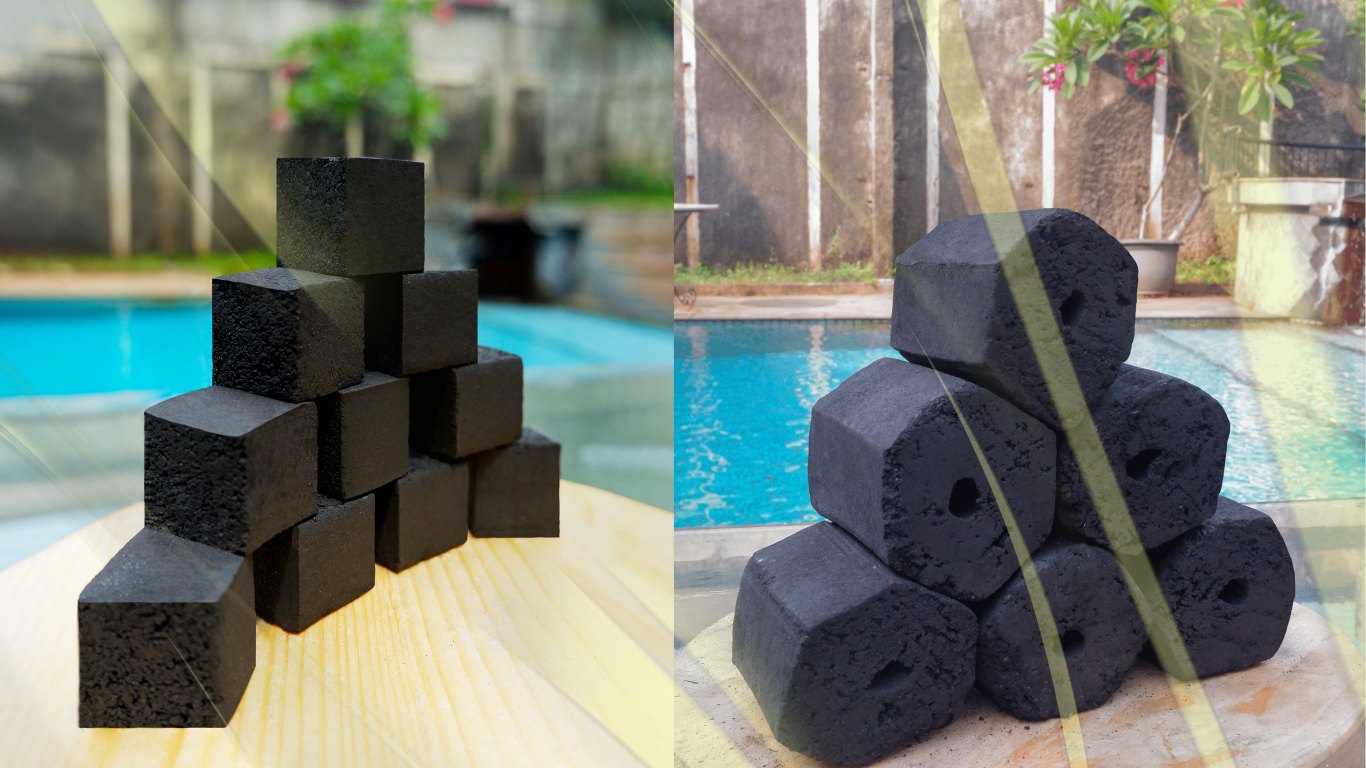
Cube charcoal briquettes are widely recognized for their compact shape, efficient packaging, and consistent burning characteristics. The symmetrical design allows manufacturers to maintain product uniformity, making it attractive for premium hookah brands and distributors that prioritize a professional appearance.
Hexagonal hookah charcoal, on the other hand, offers a distinctive shape that has gained popularity among certain markets because of its airflow advantages and longer-lasting performance. The unique structure can create a different heating experience, making it suitable for customers who prefer extended smoking sessions.
For charcoal importers and wholesalers, the better-selling product depends on multiple factors, including regional preferences, customer expectations, packaging strategy, and the positioning of the brand. There is no universal winner because different markets value different product characteristics.
Product Design and Consumer Perception
Cube charcoal is often associated with premium hookah experiences because of its clean appearance and professional presentation. Many retailers prefer cube shapes because they stack efficiently inside packaging, creating a visually attractive product display.
Hexagonal charcoal provides differentiation in a competitive market. Its unique shape can help brands stand out on retail shelves and online marketplaces where product appearance influences purchasing decisions.From a B2B perspective, product differentiation can create additional sales opportunities. Importers who supply multiple customer segments may choose to offer both cube and hexagonal options to cover different market preferences.
Graha Mitra Lestarindo can support international buyers by providing charcoal briquette solutions designed according to market requirements, including shape, size, packaging, and supply volume.
Burn Performance and User Experience Comparison
Burn performance remains one of the most important factors when buyers evaluate hookah charcoal. Restaurants, lounges, and individual consumers expect charcoal that provides stable heat, minimal odor, and reliable burning time.
Cube charcoal is popular because its uniform dimensions allow predictable heat distribution. This consistency is valuable for professional hookah environments where staff need reliable performance during busy operating hours.
Hexagonal charcoal may provide advantages through its internal airflow design. The shape can encourage efficient combustion and may support longer burning sessions depending on density, raw material quality, and production standards.
However, shape alone does not determine charcoal quality. Factors such as coconut shell raw material, carbonization process, ash content, moisture level, and production control often have a greater impact on overall performance.
Quality Factors Beyond ShapeInternational buyers should evaluate charcoal based on technical specifications rather than appearance alone. High-quality coconut charcoal briquettes typically require consistent production standards to meet customer expectations.
Important evaluation points include burning duration, ignition speed, smoke production, odor level, ash percentage, and resistance to breaking during transportation.
For B2B customers, consistency between shipments is critical. A supplier that delivers stable quality helps distributors protect their reputation and maintain long-term relationships with retailers.
Therefore, when comparing cube and hexagonal charcoal, businesses should consider the complete product specification instead of focusing only on shape.
Market Demand and Buyer Preferences
The question of which charcoal sells better depends heavily on market segmentation. Some regions have stronger demand for cube charcoal because consumers are familiar with the format and associate it with premium hookah products.
Other markets may prefer hexagonal charcoal because customers are interested in unique designs and different smoking experiences. Distributors that understand their target customers can select products that match local demand.
Wholesale buyers often consider packaging flexibility, product differentiation, and customer education when choosing charcoal products. A well-presented product with clear advantages can perform better regardless of shape.
For international trading companies, offering multiple charcoal formats can become a competitive advantage. It allows businesses to serve different customer groups without depending on one product category.
Which Product Has Better Commercial Potential?
Cube charcoal often has strong commercial potential because it fits established market expectations. Its standardized shape makes inventory management, packaging, and marketing easier for many distributors.
Hexagonal charcoal can create opportunities for brands looking for differentiation. Companies that want to introduce a unique product line may find this format useful for attracting attention.
The strongest sales strategy is usually based on understanding customer needs rather than choosing one shape universally. Successful charcoal suppliers often provide customized solutions for different markets.
Graha Mitra Lestarindo can help international partners identify suitable charcoal formats based on their distribution channels, customer profiles, and business objectives.
Manufacturing and Supply Chain Considerations
For manufacturers and exporters, production efficiency plays an important role in determining product availability and pricing. Different charcoal shapes require different production considerations, including mold design, quality control, and packaging processes.
Cube charcoal production is widely adopted because standardized dimensions simplify manufacturing operations. This can support consistent output for large-volume international orders.
Hexagonal charcoal requires careful production control to maintain structural strength and performance. Poor manufacturing processes can affect durability during shipping and handling.
A reliable supplier must focus on more than production capacity. Quality assurance, export experience, documentation, and communication are essential factors for international B2B partnerships.
Choosing the Right SupplierInternational buyers should evaluate charcoal manufacturers based on experience, production capability, quality standards, and ability to meet customized requirements.
A professional supplier should provide clear product specifications, consistent samples, and transparent communication throughout the purchasing process.For companies importing charcoal briquettes, supplier reliability directly affects customer satisfaction. Delayed shipments or inconsistent quality can create significant business challenges.
Partnering with an experienced manufacturer such as Graha Mitra Lestarindo allows buyers to access charcoal products designed for international distribution needs.
Choosing the Right Charcoal Product Strategy
The decision between cube and hexagonal hookah charcoal depends on business goals, customer expectations, and market opportunities. Both formats have advantages that can support different commercial strategies.
Cube charcoal may be ideal for businesses targeting premium customers who value consistency, professional packaging, and familiar product formats.Hexagonal charcoal may be suitable for brands seeking differentiation and unique product positioning in competitive markets.The most successful B2B approach is to analyze customer demand, test product acceptance, and work with a supplier capable of adapting to market requirements.
FAQs
1. Which hookah charcoal sells better, cube or hexagonal?Both cube and hexagonal hookah charcoal have strong market potential. Cube charcoal is often preferred for its standardized appearance, while hexagonal charcoal attracts buyers looking for product differentiation.
2. Is cube charcoal better for hookah lounges?Cube charcoal is commonly used by professional hookah businesses because its consistent shape supports predictable heat management and easy handling.
3. Does hexagonal charcoal burn longer than cube charcoal?Burning time depends more on charcoal density, raw materials, and manufacturing quality than shape alone. Both formats can deliver long burning performance when produced correctly.
4. What type of charcoal is best for international wholesale buyers?The best choice depends on customer demand, market location, packaging requirements, and supplier reliability.
5. Why is coconut charcoal popular for hookah products?Coconut shell charcoal is widely used because it can provide stable heat, low odor, and suitable performance characteristics for hookah applications.
6. How should buyers choose a charcoal briquette manufacturer?Buyers should evaluate production capability, quality control, export experience, product consistency, and communication standards before selecting a supplier.